An oil and gas anti-drone solution must improve awareness around high-consequence assets without conflicting with hazardous-area controls, process safety, communications or emergency procedures.
Refineries, terminals, production fields and pipelines contain very different layouts and risk zones. Procurement should connect drone scenarios to process consequences, existing security systems and the safe installation and maintenance rules for each area.
Executive Decision Summary
Energy-sector projects should:
- Prioritize control rooms, substations, storage, flare areas, loading points, pipeline nodes and remote production assets.
- Coordinate with process safety, hazardous-area classification, emergency response, IT/OT cybersecurity and site security.
- Use layered sensing where metal structures, pipe racks, tanks and RF noise limit a single technology.
- Integrate alerts into the existing command, VMS, access-control or incident-management environment.
- Specify environmental, corrosion, dust, heat, lightning and lifecycle requirements before product selection.
Energy-Site Threat and Operating Model
The buyer should define events in terms of asset consequence and operator action.
| Operational concern | Why it matters | Information the buyer should define |
|---|---|---|
| Observation over a critical process area | Unauthorized imagery or persistent surveillance may require rapid verification and security response. | Protected assets, privacy/evidence objective, permitted camera views and escalation rules. |
| Drone carrying an unknown payload | A target near tanks, pipelines or power assets may create a high-consequence uncertainty. | Standoff zones, warning time, emergency coordination and safe response boundaries. |
| Remote pipeline or production-site intrusion | The site may be unattended with limited power, bandwidth and maintenance access. | Remote alerting, power autonomy, communications, health monitoring and response travel time. |
| RF interference or dense industrial clutter | Structures and industrial systems can affect RF, radar and optical performance. | RF survey, metallic clutter map, installation positions and representative test routes. |
| Authorized inspection drone | Energy operators often use drones for inspection and mapping. | Flight approval data, allow-list governance, contractor process and audit requirements. |
The incident plan should distinguish authorized inspection, safety-related observation, security escalation and emergency response.
Layered Counter-UAS Architecture
A dependable project is designed as a sequence of functions rather than a single appliance. Each layer should have a documented input, output, interface and operator responsibility.
| Layer | Required function | Procurement evidence |
|---|---|---|
| 1. Detect | Discover activity using RF sensing, radar or another approved sensor appropriate to the threat profile. | Supported target classes, frequency scope, update rate, coverage assumptions and known limitations. |
| 2. Verify | Correlate alerts with EO/IR, track history, operator observations and other approved data sources. | Day/night performance, slew-to-cue workflow, recording format and false-alarm handling. |
| 3. Command | Present tracks, alarms, health status and evidence in a controlled operating interface. | Map layers, user roles, audit logs, API or SDK documentation and cybersecurity controls. |
| 4. Decide | Apply the approved concept of operations and escalation rules. | Alarm priorities, operator permissions, decision records, notification paths and response time objectives. |
| 5. Respond | Use authorized non-kinetic, security or law-enforcement actions appropriate to the incident. | Legal authority, spectrum permission, safety interlocks, human authorization and post-event reporting. |
Oil, Gas and Energy Coverage Zones
Define zones from asset consequence, access and installation constraints.
| Zone | Recommended coverage objective | Typical design consideration |
|---|---|---|
| Core process and storage assets | Rapid detection and verification near high-consequence equipment. | Hazardous-area boundaries, metallic obstruction, camera placement, standoff and maintenance permits. |
| Perimeter and approach sectors | Earlier awareness before targets reach core assets. | Fence line, terrain, adjacent roads, neighboring facilities and line of sight. |
| Remote pipeline or field node | Unattended monitoring with reliable health and communications. | Power autonomy, bandwidth, environmental enclosure, service travel and physical security. |
| Loading, port or transport interface | Monitor changing vehicle, vessel and contractor activity. | Clutter, public areas, temporary obstructions, authorized drones and multi-agency coordination. |
| Security operations center | Correlate drone alerts with VMS, access, incident and emergency systems. | IT/OT separation, user roles, API security, time sync, data retention and escalation. |
Recommended JianHong Product Roles
The following products are starting points for configuration discussions. Final quantities, frequency coverage, interfaces and installation formats must be confirmed from a site survey and an approved concept of operations.
| Product | Role in this solution | When to shortlist it |
|---|---|---|
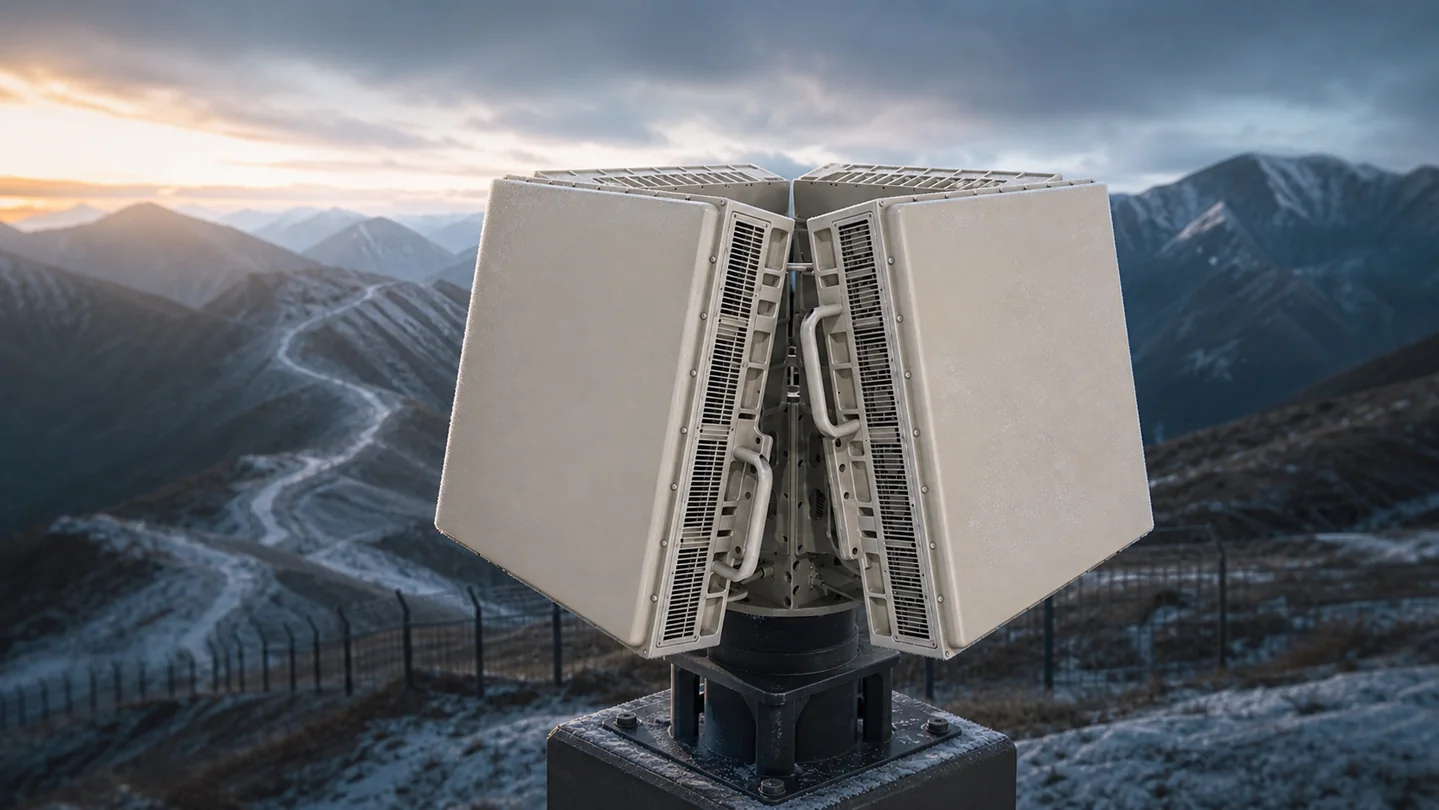
| P4 Fixed Drone Detection System | Persistent RF-based awareness for defined site sectors. | Use at permanent facilities with supported link threats and stable installation points. |
| CD800 Integrated Detection & Signal Management System | Multi-sensor command, alert correlation and integration. | Use when a site needs a central operating layer and several field devices. |
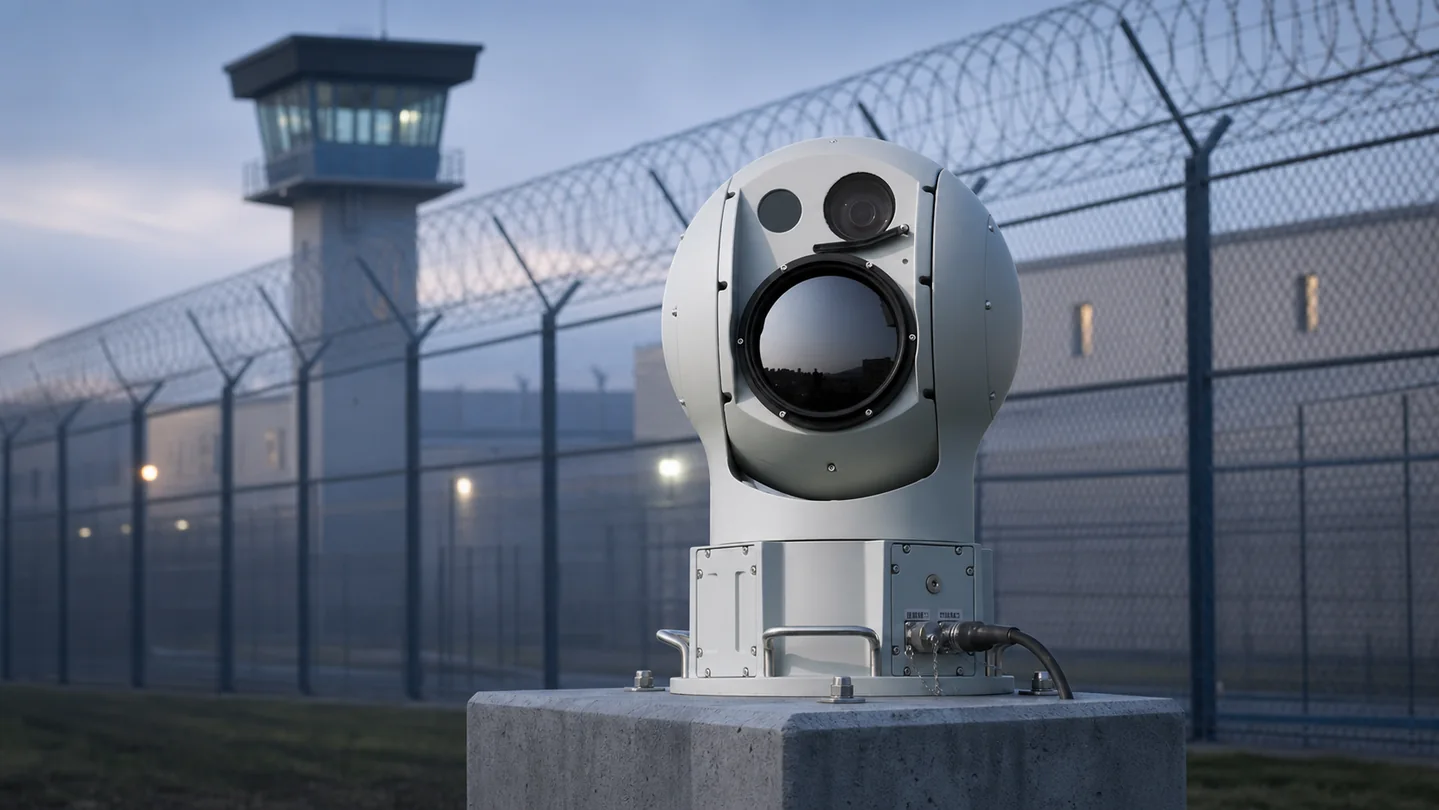
| G1 EO/IR Drone Tracking System | Visual or thermal verification and evidence capture. | Use where operators need day/night confirmation from approved camera positions. |
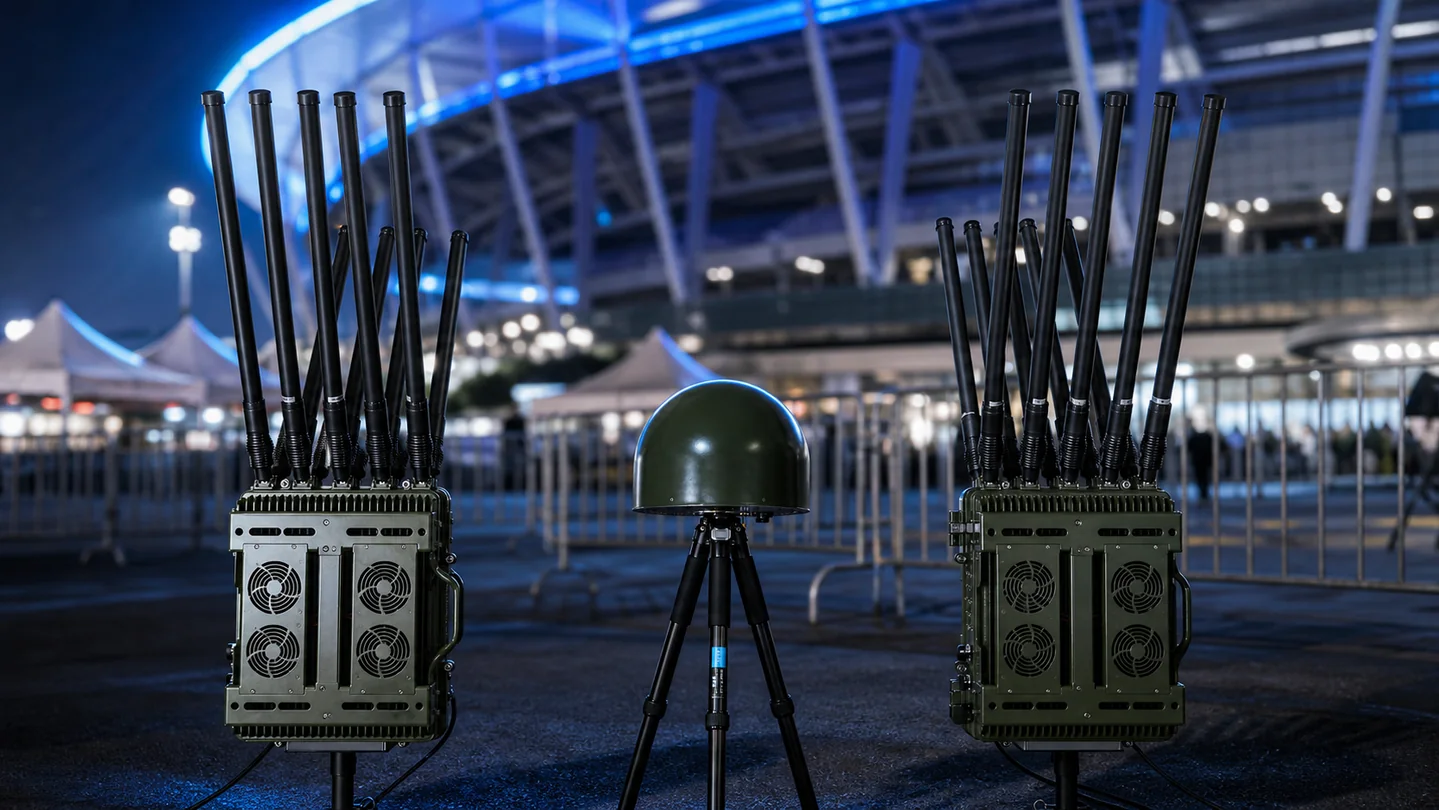
| C6 Vehicle-Mounted Anti-Drone Jammer | Mobile active-response component for authorized teams. | Consider for wide sites only after legal authority, band plan and process safety review. |
| X12 Multi-Band Anti-Drone Jamming System | Configurable integrated response component. | Shortlist only for approved projects with defined frequencies, interfaces and safety interlocks. |
Technical Requirements to Put in the RFQ
A useful request for quotation describes the operating outcome and acceptance method, not only a product name. Ask bidders to respond against the same requirement matrix.
| Requirement group | Buyer input | Evidence requested from supplier |
|---|---|---|
| Threat definition | Drone types, links, likely routes, operating altitude, speed and autonomy concerns. | A compliance matrix explaining what is detectable, conditionally detectable or outside scope. |
| Coverage | Protected boundary, warning zones, terrain, structures, line of sight and required warning time. | Coverage drawing, sensor placement assumptions, blind-zone analysis and expansion options. |
| Environment | Temperature, rain, dust, wind, salt, vibration, lightning and power quality. | Environmental ratings, installation limits, thermal design and maintenance requirements. |
| Performance | Required alert latency, track continuity, direction finding, classification and evidence retention. | Test method, representative evidence, confidence conditions and documented limitations. |
| Integration | VMS, PSIM, GIS, command platform, network, time source and third-party interfaces. | Protocol list, API documentation, data ownership, cybersecurity architecture and version policy. |
| Lifecycle | Operating hours, support response, spares, training, warranty and expected service life. | Maintenance plan, remote diagnostics, spare-parts list, upgrade policy and support SLA. |
| Compliance | Destination, end user, import requirements, spectrum rules and operational authority. | Export screening, certificates, authorization dependencies and a clear division of responsibilities. |
Deployment and Integration Plan
Energy deployment needs formal management of change, installation permits and coordination with process and cybersecurity teams.
- Rank assets by safety, continuity, environmental and security consequence.
- Define drone scenarios, authorized inspection programs, warning zones and operator decisions.
- Survey hazardous classifications, structures, RF conditions, sight lines, power, network and lightning risk.
- Create a sensor and integration design that keeps equipment and maintenance within approved locations.
- Pilot representative routes around tanks, pipe racks, remote nodes and perimeter sectors.
- Integrate with approved security systems while maintaining IT/OT segmentation and audit controls.
- Complete acceptance, management-of-change records, training, maintenance and emergency exercises.
Turnarounds, construction, new tanks, cranes, radio systems and inspection programs can change coverage and should be included in periodic reviews.
FAT and SAT Acceptance Framework
Acceptance criteria should be agreed before manufacturing and installation. The project team should separate factory verification from performance testing at the real site.
| Test area | Factory acceptance test (FAT) | Site acceptance test (SAT) |
|---|---|---|
| Configuration | Verify models, quantities, interfaces, firmware, accessories and documentation before shipment. | Confirm installed assets, coordinates, calibration, network configuration and as-built drawings. |
| Detection workflow | Demonstrate sensor outputs and alarm processing with controlled inputs or representative targets. | Run agreed routes and scenarios across priority zones, including repeat passes and edge conditions. |
| Operator workflow | Verify user roles, alarm acknowledgement, evidence export and escalation logic. | Measure real operator actions, notification timing, handover and incident reporting. |
| Integration | Test documented APIs, data fields, time synchronization, health reporting and fault states. | Validate end-to-end exchange with the buyer’s operational systems and network policies. |
| Reliability | Conduct burn-in, restart, power recovery and component health checks. | Observe defined continuous operation, communications recovery and environmental behavior. |
| Training and handover | Review manuals, maintenance tools, spares and training materials. | Complete operator and maintainer training, competency checks and signed handover records. |
Record the test geometry, target type, route, altitude, weather, RF conditions, software version and operator actions. A single maximum-range demonstration is not a complete acceptance test.
Information to Send for a Project Proposal
Providing the following information helps engineering teams return a useful architecture instead of a generic equipment list:
- Site type and map showing process, storage, power, loading, control and remote assets.
- Hazardous-area classifications, installation restrictions and permit requirements.
- Target types, likely routes, authorized inspection flights and response objectives.
- Temperature, dust, salt, humidity, corrosion, wind, lightning and solar exposure.
- RF survey information and known industrial communications or interference sources.
- Security operations, VMS, PSIM, GIS, access control, incident and API requirements.
- IT/OT segmentation, cybersecurity, user roles, logging and retention policies.
- Power quality, redundancy, backup duration and remote-site autonomy.
- Authority and process-safety scope for any active response.
- Lifecycle, spares, field support, training and planned acceptance scenarios.
Where security rules prevent sharing an exact drawing, provide an anonymized site plan with approximate distances, terrain, protected zones and installation constraints.
Common Procurement Mistakes
- Installing equipment before hazardous-area and process-safety review.
- Using one range number across tanks, pipe racks, open fields and remote sites.
- Ignoring authorized inspection drones and contractor flight approvals.
- Connecting security equipment to operational networks without cybersecurity architecture.
- Selecting products without heat, dust, corrosion, lightning and maintenance evidence.
- Treating active mitigation as a normal security function without legal and safety authorization.
Related Procurement Guides
Frequently Asked Questions
Can counter-UAS equipment be installed in a hazardous area?
Only equipment and installation methods approved for the specific site classification should enter a hazardous area. Many designs place sensors outside classified zones and confirm the concept with site safety teams.
How do tanks and pipe racks affect detection?
Large metallic structures can block sight lines, create multipath and add radar clutter. A site survey, coverage model and representative routes are necessary.
Can authorized inspection drones be excluded?
The workflow can incorporate approval information and operational rules, but governance, data quality and audit controls are required. Detection and authorization should remain traceable.
Should remote pipeline sites use the same architecture as a refinery?
Not necessarily. Remote sites may prioritize low power, edge processing, secure low-bandwidth communications, remote diagnostics and field-replaceable components.
Can an energy company operate jamming equipment?
Only with the required legal and spectrum authority and after process-safety and interference risks are formally approved. Rules vary by jurisdiction and end user.
What should energy-site SAT include?
Test priority approaches, structure shadow, day/night verification, network and power recovery, control-room integration, authorized-flight handling and environmental operating procedures.
Official Planning References
For projects connected to civil aviation or U.S. operations, review the FAA counter-UAS legal and policy resources and the FAA airport detection and mitigation guidance. International airport stakeholders can also consult the ICAO UAS intrusion protection material. These references do not replace local legal, spectrum, aviation, import or operational review.
Plan Counter-UAS Protection for an Energy Site
Share an anonymized asset map, hazard constraints, environmental conditions, approved installation areas and security-system interfaces for an engineering proposal.