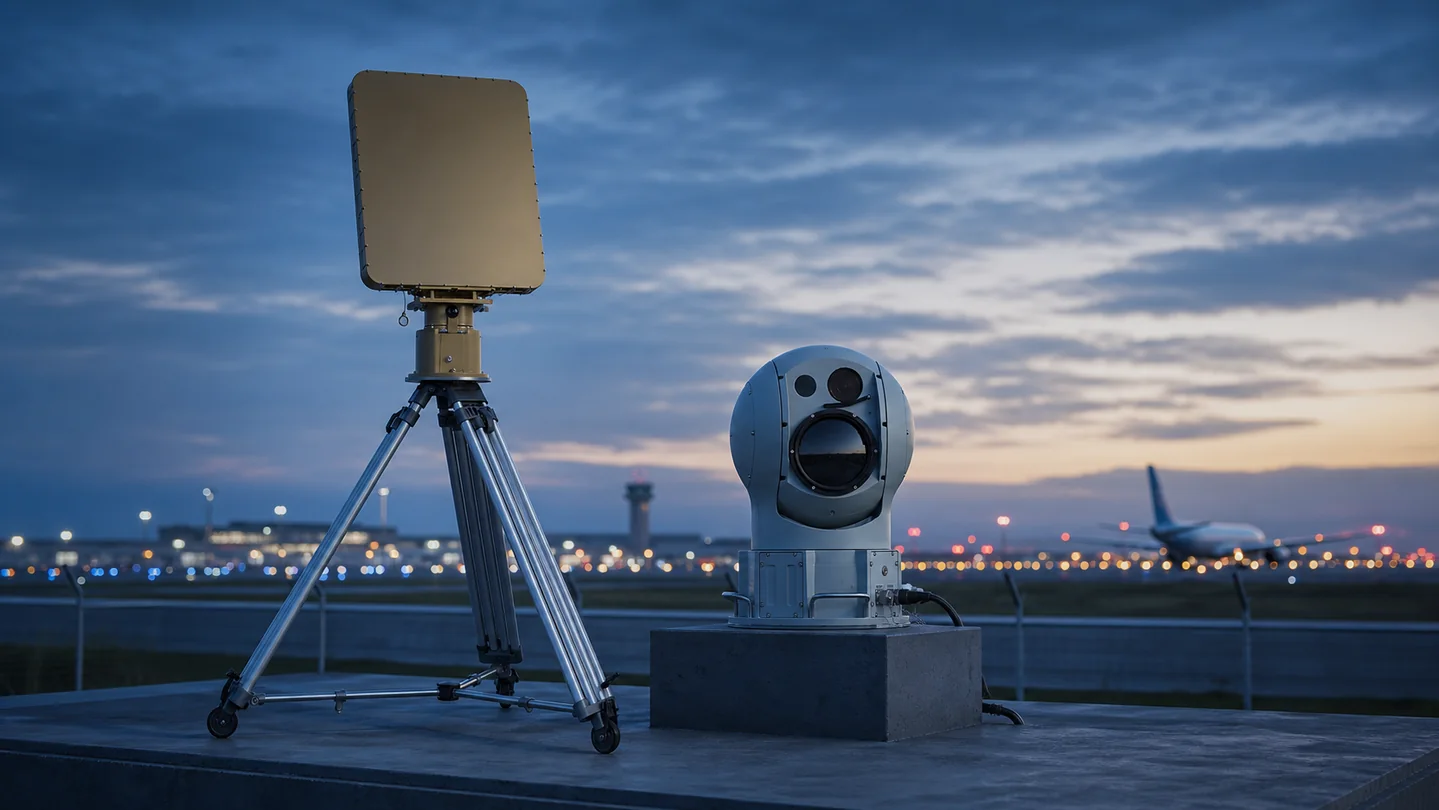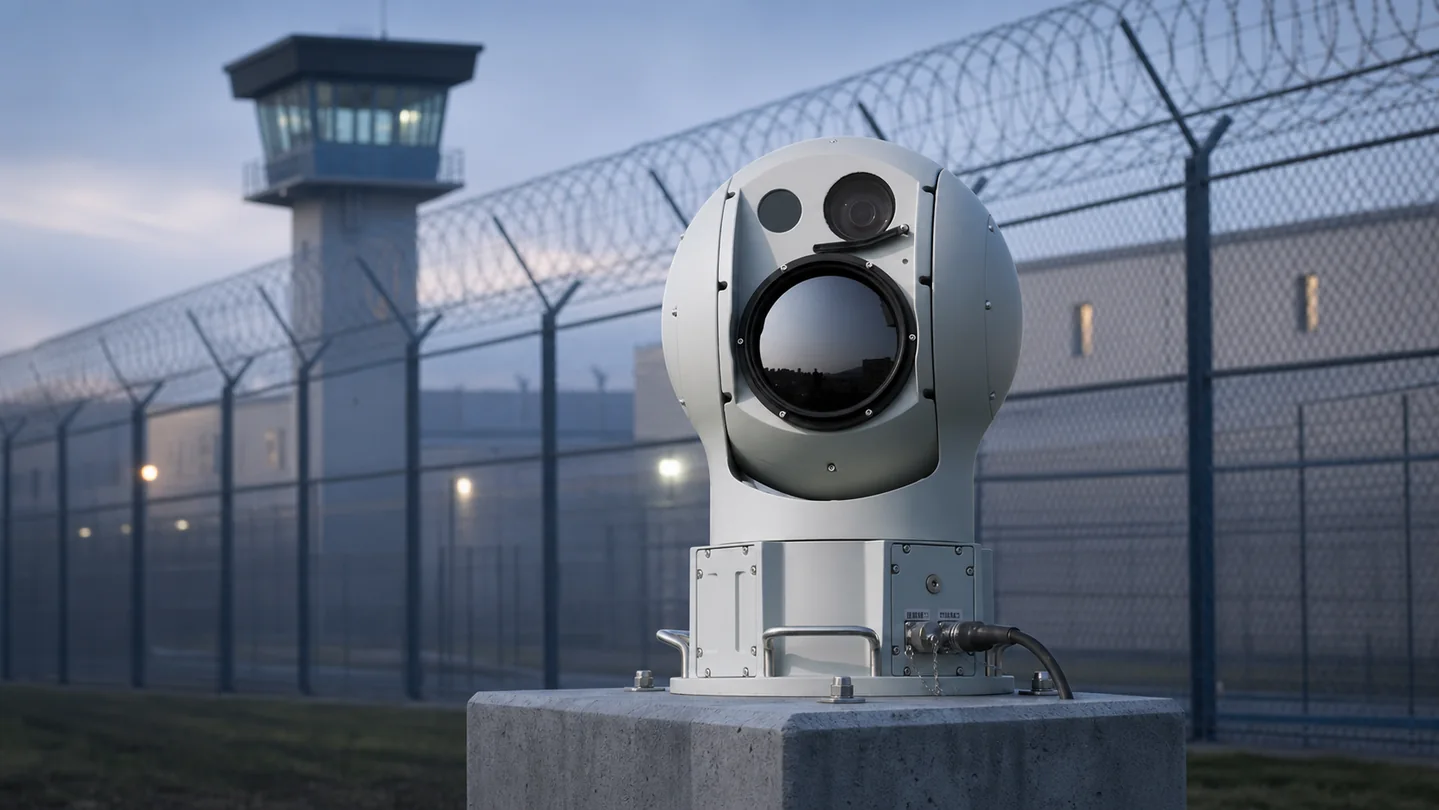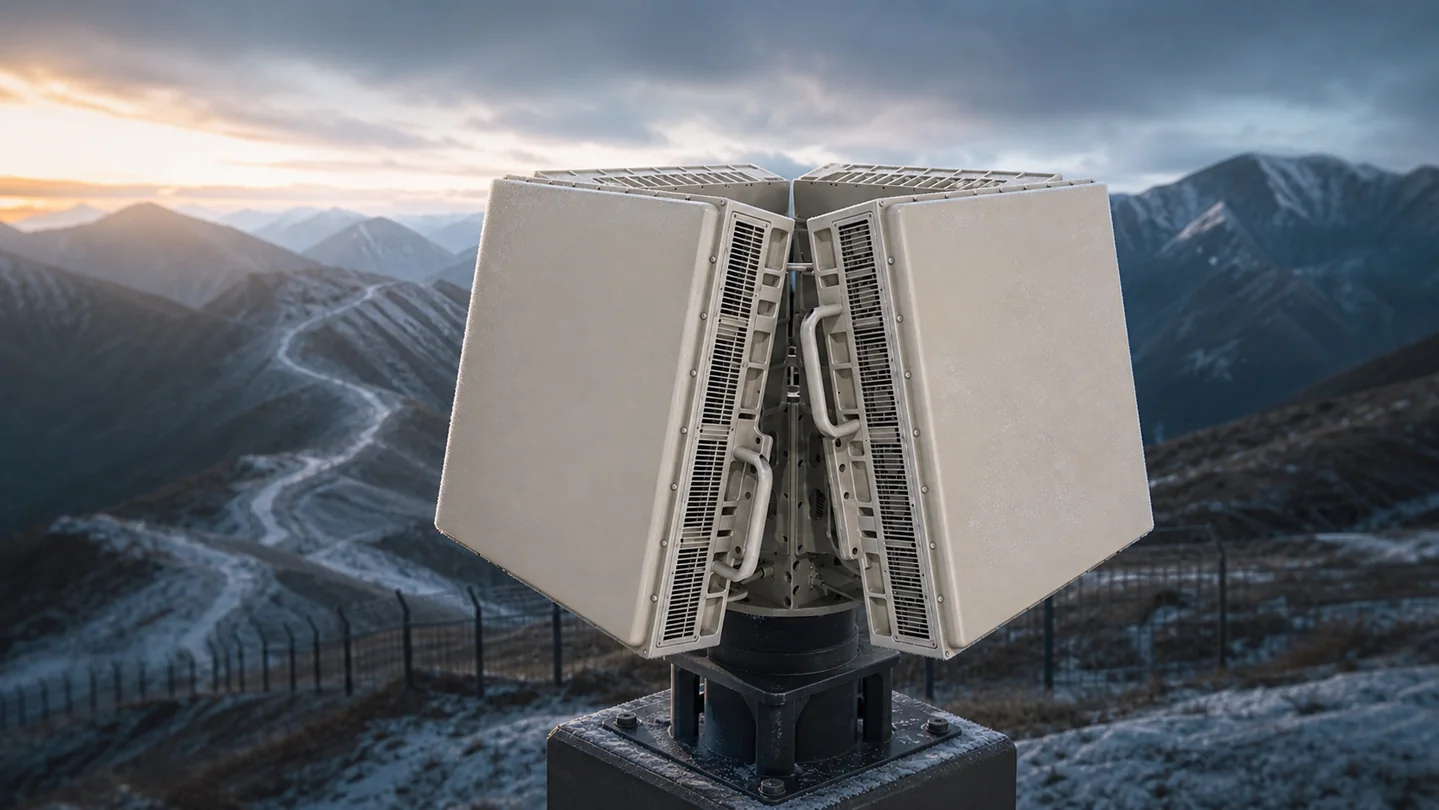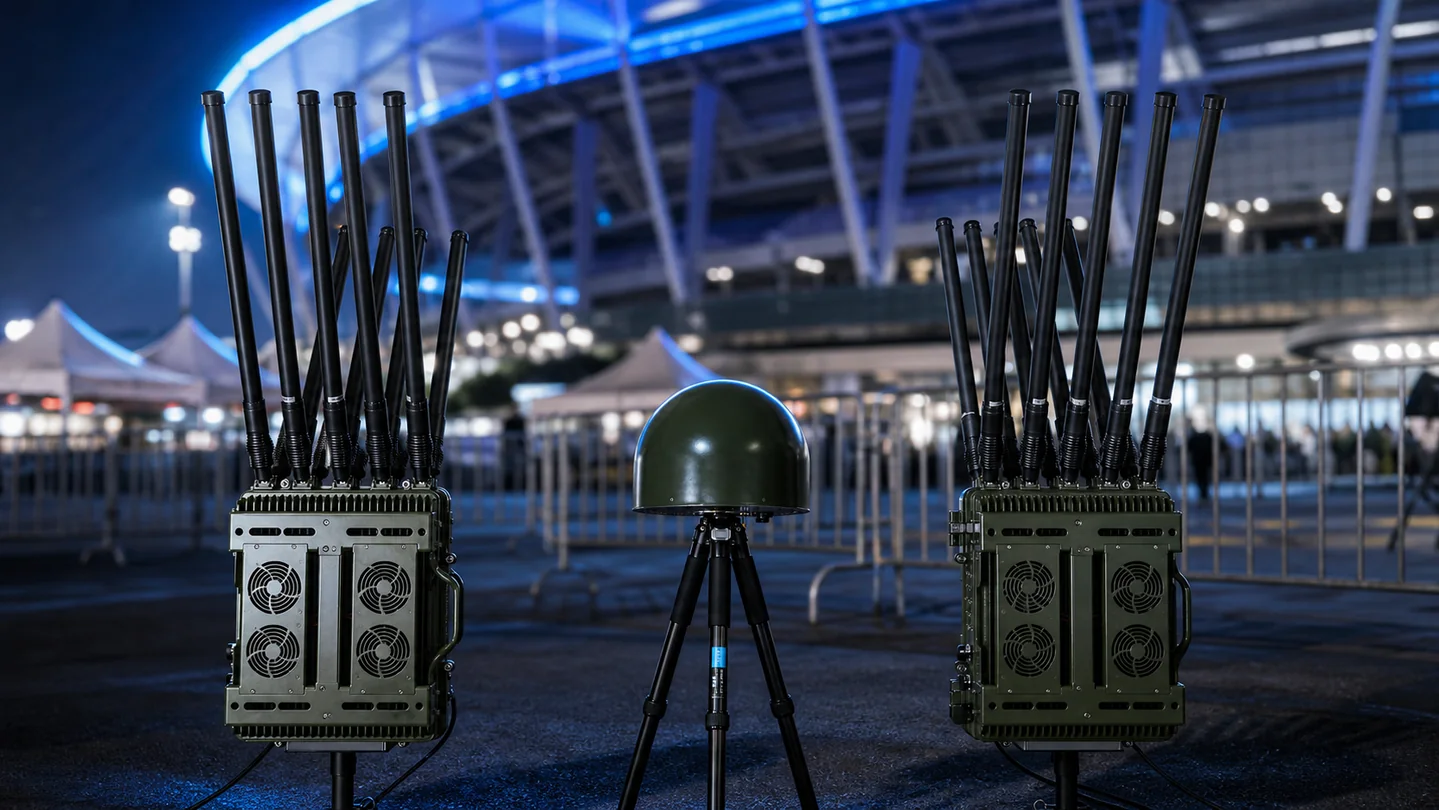
An event security anti-drone solution must deploy quickly, operate within temporary command structures and deliver clear alerts without disrupting communications, aviation or public safety.
Event sites change by day and by schedule. Temporary structures, crowds, media, authorized filming, nearby buildings and dense RF activity create a different environment from a permanent facility. The project must be planned around the event timeline and decision chain.
Executive Decision Summary
Effective event deployments usually include:
- An advance survey of venue geometry, nearby launch points, temporary structures and RF conditions.
- Portable or relocatable detection positioned around priority approaches and crowd areas.
- A clear authorized-drone process for broadcasters, police, venue operators and contractors.
- A command workflow linking counter-UAS operators, event control, aviation stakeholders and response teams.
- Pre-event rehearsals, daily checks, evidence retention and a documented demobilization plan.
Event Threat and Operating Model
Map each scenario to the event schedule, crowd condition and response time.
| Operational concern | Why it matters | Information the buyer should define |
|---|---|---|
| Drone over a dense crowd | Falling objects, distraction and uncertain payload create public-safety consequences. | Crowd zones, evacuation considerations, warning time, public messaging and safe response boundaries. |
| Unauthorized filming or surveillance | The target may approach briefly from nearby roofs, parks or roads. | Privacy/evidence objective, likely launch points, direction need and response coordination. |
| Authorized media or security drone | Legitimate flights can produce repeated alarms if approvals are not integrated. | Flight schedule, aircraft/operator records, approval authority, updates and audit process. |
| Fast FPV approach | Low flight and short warning can compress verification and response. | Likely corridors, target speed, acceptable warning time, sensor mix and rehearsed escalation. |
| RF congestion and temporary structures | Media systems, radios, LED screens and structures can change detection conditions. | RF survey windows, final site layout, threshold tuning and daily verification procedure. |
The operational plan should include degraded modes: lost backhaul, moved equipment, changed venue layout, weather interruption and unexpected authorized flights.
Layered Counter-UAS Architecture
A dependable project is designed as a sequence of functions rather than a single appliance. Each layer should have a documented input, output, interface and operator responsibility.
| Layer | Required function | Procurement evidence |
|---|---|---|
| 1. Detect | Discover activity using RF sensing, radar or another approved sensor appropriate to the threat profile. | Supported target classes, frequency scope, update rate, coverage assumptions and known limitations. |
| 2. Verify | Correlate alerts with EO/IR, track history, operator observations and other approved data sources. | Day/night performance, slew-to-cue workflow, recording format and false-alarm handling. |
| 3. Command | Present tracks, alarms, health status and evidence in a controlled operating interface. | Map layers, user roles, audit logs, API or SDK documentation and cybersecurity controls. |
| 4. Decide | Apply the approved concept of operations and escalation rules. | Alarm priorities, operator permissions, decision records, notification paths and response time objectives. |
| 5. Respond | Use authorized non-kinetic, security or law-enforcement actions appropriate to the incident. | Legal authority, spectrum permission, safety interlocks, human authorization and post-event reporting. |
Event Venue Coverage and Deployment Zones
Temporary deployments should focus on decision time and likely approaches rather than uniform coverage.
| Zone | Recommended coverage objective | Typical design consideration |
|---|---|---|
| Venue bowl or protected crowd zone | Immediate alert and verification for activity over people or critical event space. | Occlusion, temporary roofs, screens, camera policy and safe operator location. |
| Outer approach and likely launch area | Gain warning before a target reaches the crowd or VIP zone. | Nearby roofs, roads, parks, public access, privacy and law-enforcement coverage. |
| VIP, broadcast and operations area | Prioritize high-consequence assets and avoid conflict with authorized media systems. | Authorized drones, radio congestion, temporary structures and command access. |
| Mobile response sector | Support patrol teams as launch points or event activity changes. | Portable equipment, battery duration, communications, safe carrying and operator permissions. |
| Event command center | Correlate alerts, approvals, video and incident decisions. | Shared map, user roles, aviation contacts, event logging, evidence export and shift handover. |
Recommended JianHong Product Roles
The following products are starting points for configuration discussions. Final quantities, frequency coverage, interfaces and installation formats must be confirmed from a site survey and an approved concept of operations.
| Product | Role in this solution | When to shortlist it |
|---|---|---|
| N2 Portable Drone Detector | Portable RF detection for patrol or temporary observation. | Use for fast setup, route checks and mobile event teams where supported links are in scope. |
| N2 PRO Handheld UAV Detector | Handheld situational awareness for mobile personnel. | Use as a supplemental patrol tool rather than the only venue-wide sensor. |
| T8 Portable Anti-Drone Jamming System | Portable active-response option for authorized teams. | Shortlist only after bands, legal authority, crowd safety and operator procedure are approved. |
| D7 Shield-Type Anti-Drone Jammer | Directional handheld response component. | Use only in an approved operating plan with trained authorized personnel. |
| H8 Portable Anti-Drone Jammer | Portable configurable response component. | Consider when the mission requires mobility and the end user has the necessary authority. |
Technical Requirements to Put in the RFQ
A useful request for quotation describes the operating outcome and acceptance method, not only a product name. Ask bidders to respond against the same requirement matrix.
| Requirement group | Buyer input | Evidence requested from supplier |
|---|---|---|
| Threat definition | Drone types, links, likely routes, operating altitude, speed and autonomy concerns. | A compliance matrix explaining what is detectable, conditionally detectable or outside scope. |
| Coverage | Protected boundary, warning zones, terrain, structures, line of sight and required warning time. | Coverage drawing, sensor placement assumptions, blind-zone analysis and expansion options. |
| Environment | Temperature, rain, dust, wind, salt, vibration, lightning and power quality. | Environmental ratings, installation limits, thermal design and maintenance requirements. |
| Performance | Required alert latency, track continuity, direction finding, classification and evidence retention. | Test method, representative evidence, confidence conditions and documented limitations. |
| Integration | VMS, PSIM, GIS, command platform, network, time source and third-party interfaces. | Protocol list, API documentation, data ownership, cybersecurity architecture and version policy. |
| Lifecycle | Operating hours, support response, spares, training, warranty and expected service life. | Maintenance plan, remote diagnostics, spare-parts list, upgrade policy and support SLA. |
| Compliance | Destination, end user, import requirements, spectrum rules and operational authority. | Export screening, certificates, authorization dependencies and a clear division of responsibilities. |
Deployment and Integration Plan
Event projects should follow a countdown plan connected to site access, construction and rehearsal milestones.
- Establish the event command structure, aviation contact, authorized-drone process and legal response scope.
- Map crowd areas, VIP zones, likely approaches, launch locations, command posts and temporary structures.
- Survey RF, sight lines, power, secure backhaul and safe equipment positions after the layout is sufficiently mature.
- Select fixed-for-event, portable and mobile roles with battery, spare and weather plans.
- Configure authorized flights, alarm priorities, notification groups and evidence handling.
- Conduct pre-event scenario drills, communications checks, lost-network tests and shift handover.
- Run daily pre-opening checks, record changes and complete controlled demobilization after the event.
Late changes to stages, screens, tents, broadcast systems, flight approvals or VIP movements should be reviewed before each operating period.
FAT and SAT Acceptance Framework
Acceptance criteria should be agreed before manufacturing and installation. The project team should separate factory verification from performance testing at the real site.
| Test area | Factory acceptance test (FAT) | Site acceptance test (SAT) |
|---|---|---|
| Configuration | Verify models, quantities, interfaces, firmware, accessories and documentation before shipment. | Confirm installed assets, coordinates, calibration, network configuration and as-built drawings. |
| Detection workflow | Demonstrate sensor outputs and alarm processing with controlled inputs or representative targets. | Run agreed routes and scenarios across priority zones, including repeat passes and edge conditions. |
| Operator workflow | Verify user roles, alarm acknowledgement, evidence export and escalation logic. | Measure real operator actions, notification timing, handover and incident reporting. |
| Integration | Test documented APIs, data fields, time synchronization, health reporting and fault states. | Validate end-to-end exchange with the buyer’s operational systems and network policies. |
| Reliability | Conduct burn-in, restart, power recovery and component health checks. | Observe defined continuous operation, communications recovery and environmental behavior. |
| Training and handover | Review manuals, maintenance tools, spares and training materials. | Complete operator and maintainer training, competency checks and signed handover records. |
Record the test geometry, target type, route, altitude, weather, RF conditions, software version and operator actions. A single maximum-range demonstration is not a complete acceptance test.
Information to Send for a Project Proposal
Providing the following information helps engineering teams return a useful architecture instead of a generic equipment list:
- Venue plan, event dates, public hours, crowd zones, VIP areas and temporary structures.
- Likely launch areas, target types, FPV concern, required warning time and response objectives.
- Authorized media, police, venue and contractor drone operations.
- Available setup, rehearsal, daily check and removal windows.
- RF systems, broadcast equipment, radios, Wi-Fi and other temporary transmitters.
- Power, battery, charging, network, command-post and secure storage arrangements.
- Weather exposure, wind limits, rain protection and night-operation requirements.
- Event control, aviation, police, medical and emergency communication paths.
- Legal authority and crowd-safety constraints for any active response.
- Operator count, shifts, languages, training, spares and acceptance drills.
Where security rules prevent sharing an exact drawing, provide an anonymized site plan with approximate distances, terrain, protected zones and installation constraints.
Common Procurement Mistakes
- Arriving on event day without a final-layout RF and sight-line survey.
- Ignoring authorized broadcaster, police or venue drone operations.
- Using portable equipment without battery, charging, spare and secure-storage plans.
- Failing to connect alarms to the event command and aviation decision chain.
- Testing an empty venue but not reviewing changes created by crowds and temporary systems.
- Assuming possession of an active-response device means the event team is legally authorized to use it.
Related Procurement Guides
Frequently Asked Questions
How early should event counter-UAS planning begin?
Begin when venue, command and aviation stakeholders can define the concept of operations. Final sensor positions and tuning should be confirmed after temporary structures and RF systems are known.
Can portable detectors cover an entire stadium?
Coverage depends on structures, RF conditions, target links and placement. Portable devices can support a layered deployment, but venue-wide performance should be validated through a site-specific plan and tests.
How are authorized media drones handled?
Use a controlled approval process with schedules, aircraft/operator information, update responsibility and command-center visibility. Authorization and detection records should remain auditable.
Can event security use a jammer?
Only where the organization and operators have the required legal and spectrum authority and the response is approved for aviation, communications and crowd safety.
What should be checked every event day?
Confirm equipment positions, power, time synchronization, network, authorized flights, alarm routing, operator staffing, weather and any layout or RF changes.
What should an event proposal include?
Provide the venue plan, schedule, crowd and VIP zones, likely approaches, authorized flights, setup windows, RF systems, command workflow, authority scope and acceptance drills.
Official Planning References
For projects connected to civil aviation or U.S. operations, review the FAA counter-UAS legal and policy resources and the FAA airport detection and mitigation guidance. International airport stakeholders can also consult the ICAO UAS intrusion protection material. These references do not replace local legal, spectrum, aviation, import or operational review.
Prepare a Temporary Counter-UAS Event Plan
Share the venue layout, event schedule, protected zones, authorized flights and command structure for a portable deployment and daily readiness checklist.