A cold-weather counter-UAV system should be specified for startup, operation, storage, transport and maintenance across the complete seasonal environment—not selected from one minimum-temperature number. Low temperature affects batteries, displays, lubricants, seals, cables, connectors, cooling control and RF electronics. Temperature cycling also creates condensation and icing risks that a steady cold test does not show.
This Eastern Europe counter-UAV procurement guide is intended for authorized infrastructure owners, security integrators, government buyers and OEM partners planning fixed, vehicle-mounted or portable systems. It focuses on environmental engineering, lawful procurement and measurable acceptance criteria rather than operational countermeasure tactics.
Quick answer: define the site's temperature profile, cold-start requirement, snow and ice exposure, condensation cycles, power source, mounting location, sensor mission, spectrum authority, acceptance tests, spares and winter maintenance plan before requesting prices. Require evidence for the delivered configuration, not only a generic product temperature claim.
Why Eastern European Counter-UAV Projects Need a Cold-Weather Specification
Eastern Europe contains maritime, continental, mountain, urban and industrial environments. The same project may experience summer heat, freezing winters, wet snow, wind-driven rain, road salt, mud, dust and repeated movement between heated and unheated spaces.
Requirements also change by mission:
- Border or remote infrastructure: exposed equipment, long service intervals and limited utility power can dominate the design.
- Airport or transport hub: high availability, low false-alarm burden and careful spectrum coordination are essential.
- Energy and industrial site: large perimeters, electromagnetic noise and integration with existing control rooms require planning.
- Vehicle-mounted patrol: cold start, vibration, alternator behavior, cable routing and rapid deployment become important.
- Temporary security operation: transport cases, battery runtime, setup time and storage between deployments matter.
Write a site-specific environmental profile before selecting products. A catalog range such as “-20°C to +55°C” is useful only when the test method, stabilization time, operating mode and pass criteria are known.
Cold-Weather Requirements at a Glance
| Environmental factor | System effect | What the buyer should specify |
|---|---|---|
| Low-temperature start | Slow batteries, displays, fans, storage devices and RF stabilization | Minimum cold-soak temperature, soak time, startup deadline and required functions |
| Temperature cycling | Condensation, seal stress and connector movement | Warm/cold cycle, humidity, dwell time, energized state and recovery criteria |
| Snow and ice | Blocked apertures, antenna detuning, added load and restricted ventilation | Exposure, accumulation, de-icing method, drainage and inspection interval |
| Vehicle electrical load | Voltage dips, transients, inrush and grounding issues | Input range, startup condition, protection, bonding and alternator/battery limits |
| Road vibration and shock | Loose connectors, cable fatigue and alignment change | Mounting location, vibration profile, shock events and post-test verification |
| Winter maintenance | Reduced access and longer repair time | Spares, replaceable units, diagnostics, tools, training and response SLA |
1. Separate Storage, Cold Start and Continuous Operation
Three temperature limits are commonly confused:
- Storage temperature: the non-operating equipment can remain at this temperature without permanent damage.
- Cold-start temperature: the equipment starts after a defined cold soak and reaches the required function within a stated time.
- Operating temperature: the equipment sustains specified performance while already running.
The RFQ should state all three. If a heater is required, define whether startup time begins before or after the heater is energized, how much power the heater consumes and which functions remain unavailable during warm-up.
IEC 60068-2-1 provides an international framework for low-temperature tests on heat-dissipating and non-heat-dissipating equipment. It does not by itself select the correct test severity for a project; the purchaser and supplier must agree on temperatures, dwell periods, operating state and pass criteria.
2. Test Temperature Change and Condensation
Cold equipment brought into a heated shelter can collect moisture on and inside enclosures. The opposite transition can freeze retained moisture. Daily solar heating followed by a rapid evening temperature drop can create similar stress outdoors.
Specify:
- Expected warm-to-cold and cold-to-warm transition rates
- Indoor/outdoor movement during operation or storage
- Humidity and condensation exposure
- Drainage, breathable membranes or controlled enclosure heating
- Conformal coating or corrosion protection where required
- Insulation-resistance, startup and functional checks after cycling
A steady cold chamber test cannot replace a temperature-change or damp-heat evaluation when condensation is a credible site condition.
3. Design for Snow, Ice, Wind and Water Ingress
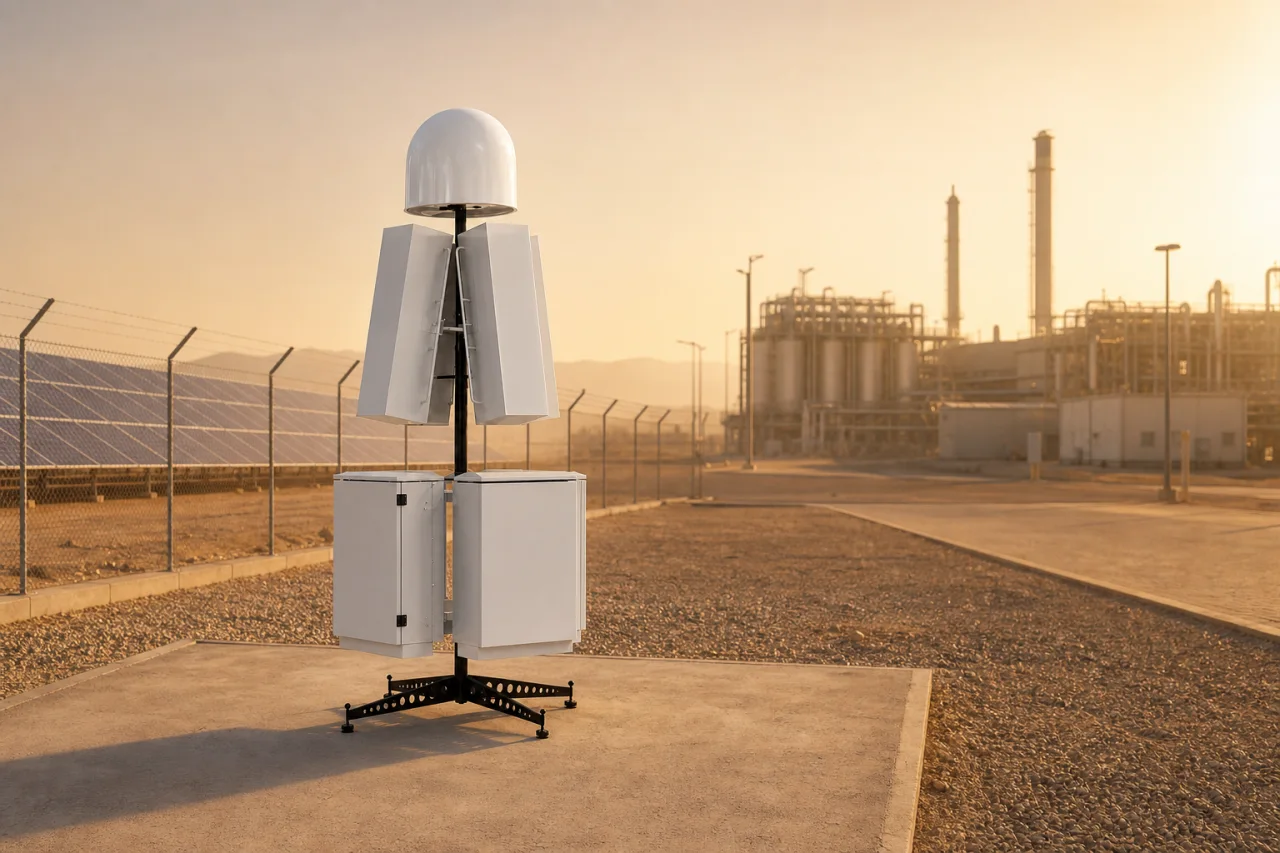
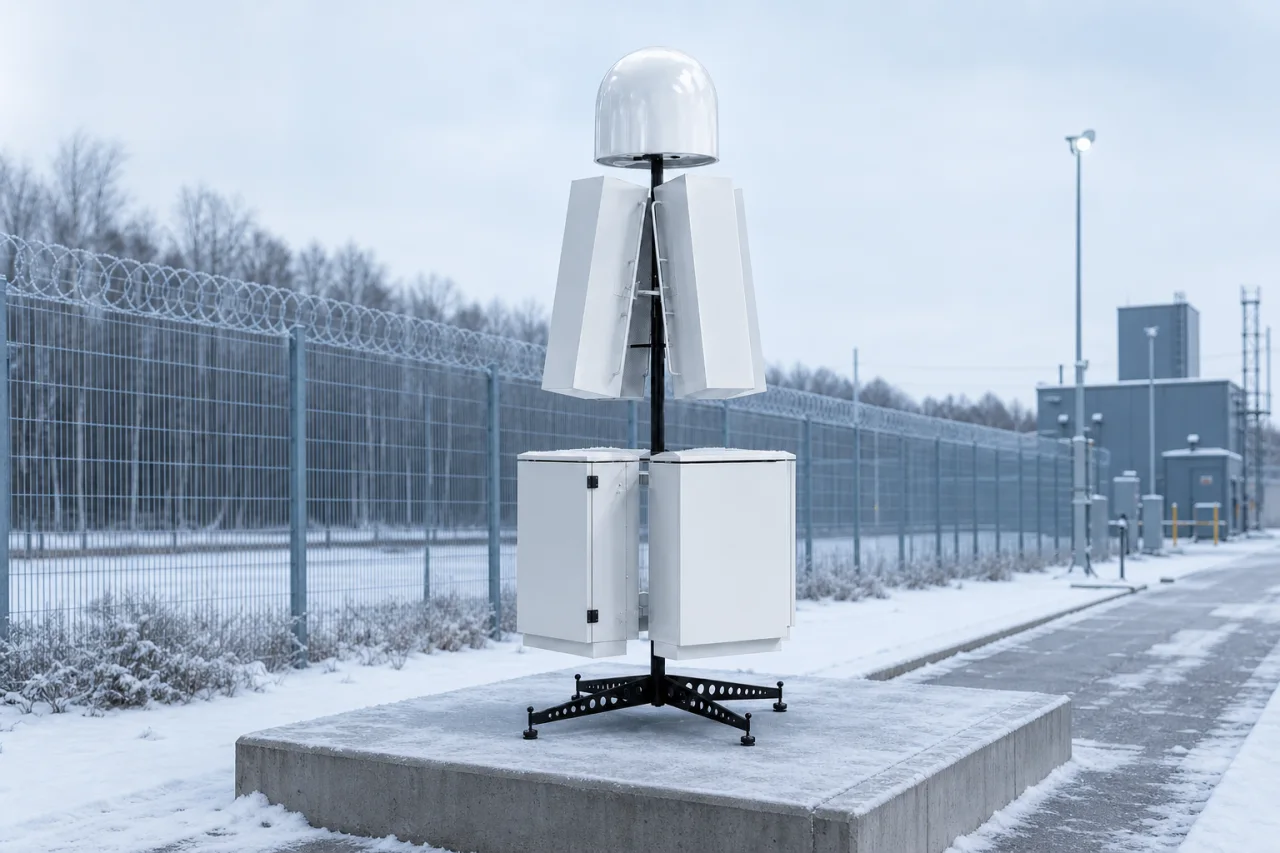
Snow and ice can cover camera windows, radar or RF apertures, cooling inlets and equipment labels. They can also change antenna performance, add weight and prevent mechanical movement.
The site design should address:
- Equipment orientation and snow-shedding surfaces
- Drainage paths that do not refreeze around connectors
- De-icing or heating for sensor windows where necessary
- Wind load for masts, antennas and enclosures
- Ice load and allowable structural deflection
- Access for safe inspection and cleaning
- Ingress protection after all glands, vents and field connectors are installed
IEC 60529 IP codes classify enclosure protection against solid objects and water. An IP rating does not prove resistance to condensation, icing, salt, solar radiation or every mounting practice, so those risks require separate requirements.
4. Verify Every Detection Layer in Winter Conditions
A layered counter-UAV system may combine RF sensing, radar, EO/IR cameras and command software. Each layer reacts differently to winter conditions and site clutter.
RF detection
RF sensing can provide awareness of active control or video links, but local radio congestion, authorized drones, terrain and the target's transmission behavior affect results. Verify receiver startup, frequency-reference stability, antenna condition and cable loss at low temperature.
Radar
Radar can detect objects without relying on a control link, but precipitation, moving vegetation, vehicles, birds, terrain and nearby structures influence clutter. Winter tests should use the delivered installation and agreed scenarios rather than only a bench test.
EO/IR confirmation
Optical and thermal cameras support confirmation and evidence. Snow glare, low sun, fog, frost, heated buildings and reduced thermal contrast can affect image quality. Ask how windows are kept clear and how camera calibration behaves after a cold start.
Command and control
The operator interface should clearly show degraded sensors, heater status, communication loss and power alarms. It should not present a normal system state when one cold-exposed subsystem has not completed startup.
Review JianHong's drone detection systems and integrated counter-UAV systems as reference architectures. Final sensor selection should follow a site survey and lawful operating concept.
5. Specify Batteries and Backup Power at the Minimum Temperature
Battery capacity and deliverable power generally decline in cold conditions, while heaters and de-icing loads increase demand. A runtime calculated at room temperature may therefore be misleading.
Request:
- Battery chemistry and manufacturer operating limits
- Usable capacity and peak current at the minimum temperature
- Heater consumption and warm-up time
- Charging limits at low temperature
- Battery-management alarms and shutdown thresholds
- Runtime test with the full sensor, network and heater load
- Safe transport, storage and replacement procedure
For remote sites, also define generator startup, fuel behavior, transfer switching, uninterruptible power and the time that the system must survive a utility outage.
6. Engineer Vehicle Power and Mounting as a System
A vehicle-mounted counter-UAV platform can provide flexible coverage, but the vehicle is not a perfect DC source or vibration-free shelter. Engine start, alternator charging, load switching, grounding and long cable runs can affect RF and control equipment.
The ISO 16750 series describes environmental stresses and tests for electrical and electronic equipment mounted in or on road vehicles. Relevant project requirements may include electrical loads, mechanical loads and climatic loads according to the actual mounting location.
The vehicle integration RFQ should define:
- Nominal system voltage and allowable input range
- Cranking dips, transients, reverse polarity and load-dump protection as applicable
- Grounding, bonding and RF cable routing
- Available alternator output at idle and under winter auxiliary loads
- Equipment startup and shutdown sequence
- Roof or rack load, center of gravity and wind load
- Vibration and shock profile at the selected mounting point
- Cabin, rooftop and external enclosure temperature limits
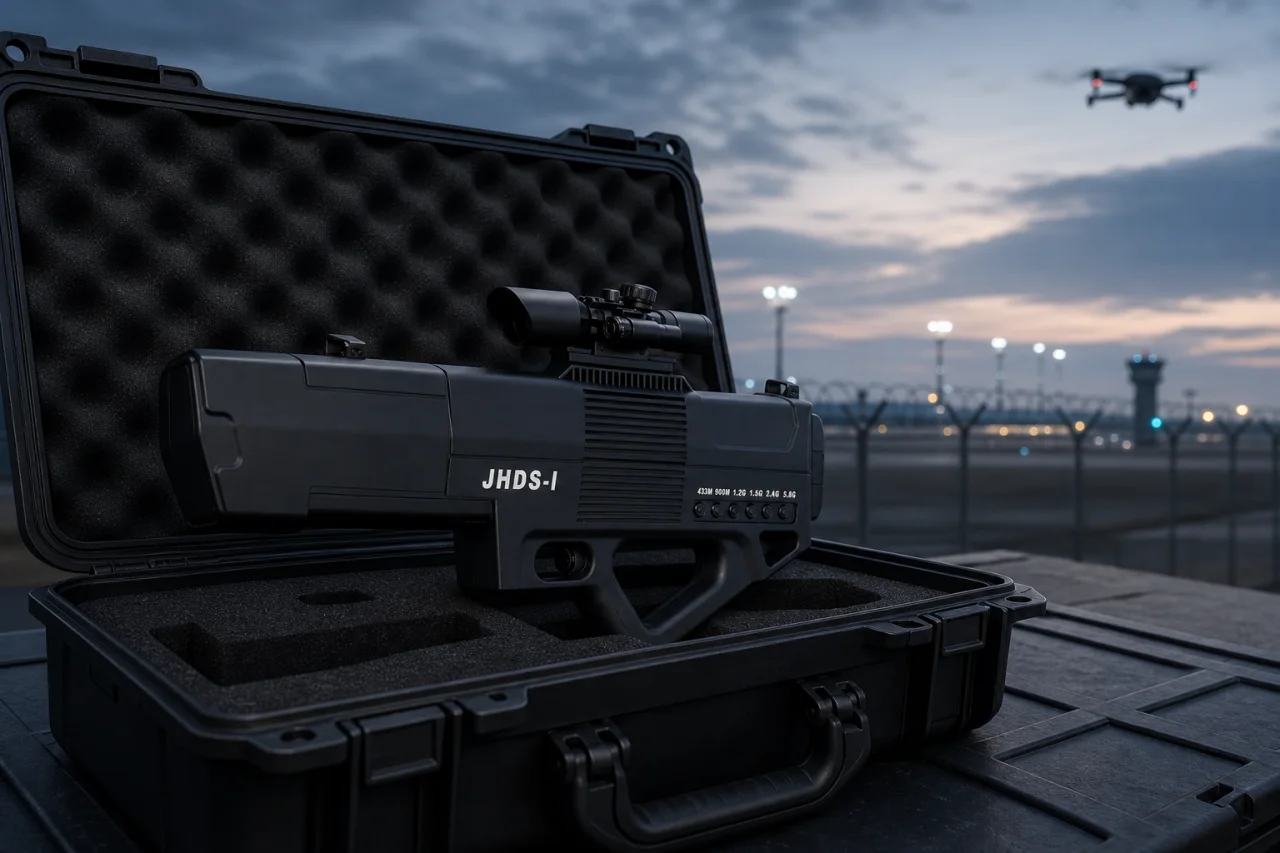
The C6 Vehicle-Mounted Anti-Drone Jammer and C12 Vehicle-Mounted Anti-Drone Jammer illustrate mobile platform formats for authorized projects. Band configuration, power, vehicle interface and operating permission must be reviewed for each destination and end user.
7. Use Winter-Ready Cables, Connectors and Service Loops
Cable jackets can stiffen at low temperature, seals can shrink and repeated flexing can damage conductors. Road salt and trapped moisture can accelerate connector corrosion.
Specify cable temperature range, minimum bend radius, UV and chemical resistance, connector sealing, strain relief, drip loops, grounding and inspection access. Avoid placing service connections where snow, water or de-icing chemicals collect.
Field-replaceable cable assemblies should be keyed and labeled. The maintenance kit should include approved caps, seals, cleaning materials, torque tools and replacement parts.
8. Plan Communications and Cybersecurity for Remote Winter Sites
Remote locations can lose network service during severe weather. The system should define what continues locally when the wide-area connection is unavailable.
Ask:
- Which detection, recording and alarm functions operate offline?
- How much local storage is available?
- How are time synchronization and event logs maintained?
- How are queued events uploaded after reconnection?
- Which remote actions are allowed, authenticated and recorded?
- How are firmware and configuration updates approved and rolled back?
- What happens if a sensor, heater or network link repeatedly disconnects?
Cybersecurity, access control and data-retention requirements should be included in procurement rather than added after commissioning.
9. Define Factory and Site Acceptance Tests
Factory acceptance testing, or FAT, verifies the delivered configuration before shipment. Site acceptance testing, or SAT, confirms performance after installation in the real environment.
| Test stage | Recommended scope | Required evidence |
|---|---|---|
| Document review | Configuration, drawings, interfaces, software versions and certificates | Approved document register and deviation list |
| Cold FAT | Cold soak, startup, alarms, RF/sensor checks, power and warm-up | Chamber record, calibrated measurements and pass/fail report |
| Environmental qualification | Agreed cold, change-of-temperature, ingress, vibration and other tests | Test method, severity, sample configuration and report |
| Installation SAT | Power, network, sensor alignment, coverage, logging and alarm workflow | Site test record and open-item list |
| Winter operational trial | Agreed performance during representative local conditions | Event logs, maintenance observations and acceptance decision |
Define pass/fail limits before testing. “System operated normally” is not a sufficient result when startup time, sensor availability, output, false alarms or battery runtime are contractual requirements.
10. Build a Winter Maintenance and Spares Plan
Environmental reliability depends on maintenance. A remote system can have good equipment but poor availability if a failed heater, damaged cable or iced window cannot be serviced quickly.
The support plan should include:
- Daily, monthly and seasonal inspection tasks
- Snow, ice and contamination removal procedure
- Pre-winter preventive maintenance
- Field-replaceable units and recommended spare quantities
- Battery replacement interval and storage conditions
- Remote diagnostic access and escalation workflow
- Training for operators and technicians
- Response time, repair time and software-support period
Ask the supplier to distinguish consumables, field-replaceable units and depot repairs. Include lead times for critical spares in the procurement decision.
11. Confirm Spectrum, Product and Trade Compliance Before Shipment
Counter-UAV equipment can involve radio receiving, transmitting, cryptographic, surveillance or interference-related functions. Legal treatment varies by destination, end user, end use and configuration.
Before a transaction, verify:
- National spectrum and operating authorization
- Product conformity, EMC, safety and radio-equipment requirements
- Aviation, privacy and data-retention rules
- Export classification, licenses and end-use statements
- Sanctions, restricted-party and ownership screening
- Re-export, transit, technical-support and software-update restrictions
Requirements affecting Russia, Ukraine, Belarus and other regional destinations can change. A marketing page or generic quotation is not a compliance determination. Buyers, exporters, banks, freight partners and integrators should use current official sources and qualified advisers before proceeding.
12. Eastern Europe Counter-UAV RFQ Checklist
Send the supplier: protected mission; site coordinates and layout; climate profile; storage, startup and operating temperatures; condensation, snow, ice, wind and ingress conditions; sensor requirements; power and network; vehicle interface; mounting; authorized response; FAT/SAT; training; spares; destination; end user; end use; and required compliance documents.
Also request a compliance matrix in which the supplier answers every requirement with “complies,” “does not comply” or a clearly described deviation. This is more useful than a general product brochure.
Common Cold-Weather Procurement Mistakes
- Using storage temperature as proof of cold-start performance
- Testing at low temperature without the delivered cables, batteries or heaters
- Ignoring condensation during movement between heated and unheated spaces
- Assuming an IP rating covers snow, ice, salt and temperature cycling
- Calculating battery runtime only at room temperature
- Ignoring alternator capacity while the vehicle runs heaters and other winter loads
- Accepting a sensor range without a site-specific winter test
- Leaving export, sanctions and spectrum checks until after production
Frequently Asked Questions
What is the minimum temperature for a counter-UAV system?
There is no universal minimum. The buyer must define the coldest storage, startup and operating conditions for the site, then require evidence for the delivered configuration and agreed test method.
Is an IP66 enclosure enough for snow and ice?
Not by itself. An IP code addresses defined solid-object and water-ingress tests. Snow accumulation, icing, condensation, corrosion, drainage, wind load and de-icing require separate design and verification.
Should a cold-weather system use enclosure heaters?
Heaters can help protect specific components or control condensation, but they add power demand, warm-up time and failure modes. The supplier should document heater control, capacity, monitoring and service access.
Can this guide be used for projects in Ukraine or Russia?
It can be used only as a preliminary environmental and RFQ framework. Spectrum law, procurement authority, sanctions, export controls, end-use restrictions and operating permissions differ and can change. A project must pass current legal and compliance review before quotation, shipment, support or operation.
Which is better for winter use: fixed or vehicle-mounted counter-UAV equipment?
Fixed systems can support continuous site coverage and permanent power, while vehicle systems provide deployment flexibility. The better format depends on the mission, protected area, power, roads, maintenance access and lawful response concept.
What should be tested during a cold FAT?
At minimum: cold soak, startup time, required sensor and RF functions, network, display, storage, alarms, heater behavior, power consumption, battery runtime where applicable and post-test inspection. Exact pass criteria must be agreed before testing.
Conclusion
A winter-ready counter-UAV system is created by project requirements, integration and evidence—not by one temperature value. Define cold start, condensation, snow and ice, power, sensors, vehicle interfaces, acceptance tests, maintenance and compliance as one procurement package. This reduces the risk of delayed startup, unavailable sensors and unplanned field repairs during the season when access is most difficult.
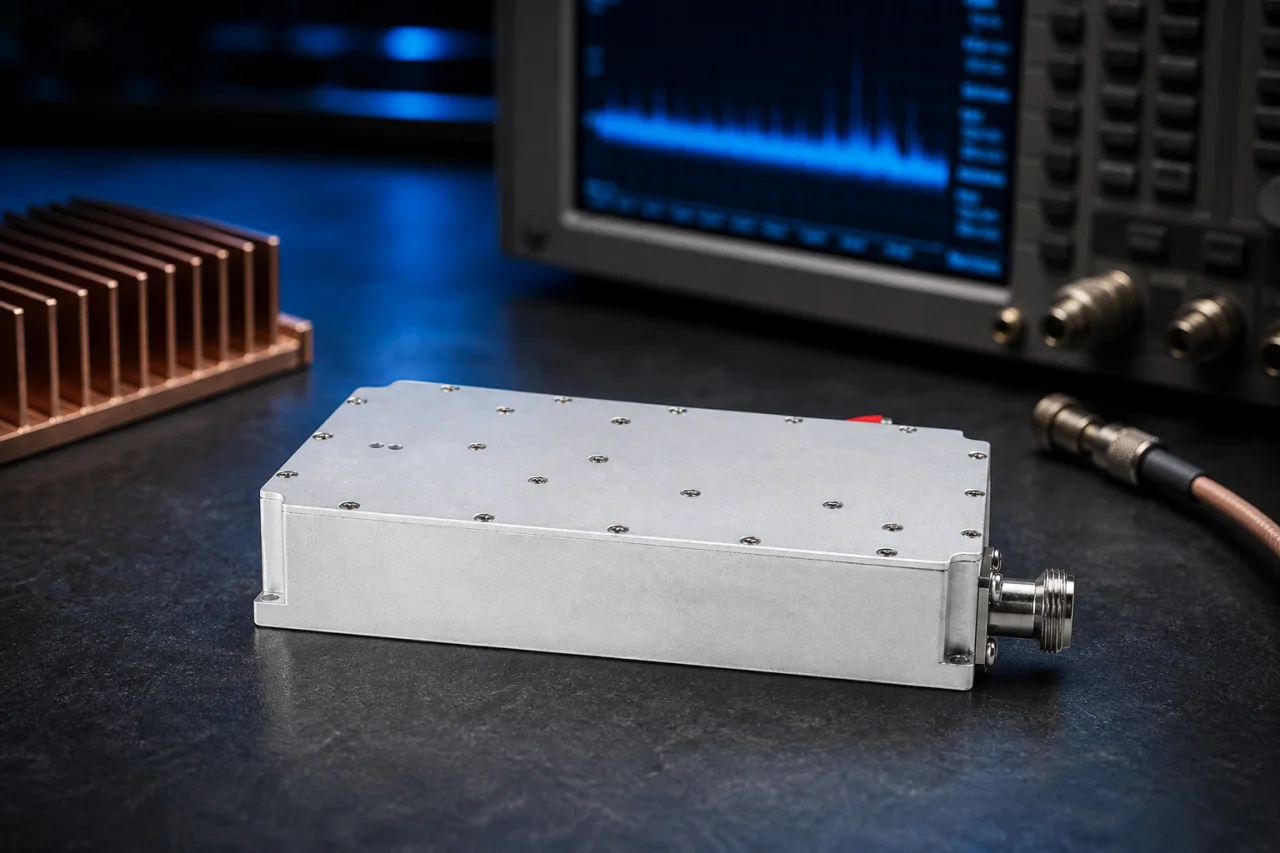
Explore JianHong's Border Anti-Drone Solution, detection equipment, integrated systems and custom RF modules. For a site-specific proposal, send the engineering team your climate and mission requirements or contact us through WhatsApp.
Standards and official references: IEC 60068-2-1:2025 cold testing, IEC ingress protection overview, ISO 16750 vehicle environmental framework, ISO 16750-4 climatic loads, ITU Radio Regulations overview, European Commission dual-use export restriction guidance, and OFAC sanctions program information. Applicable requirements must be verified for the specific product, parties, destination, end use and transaction date.