JianHong BP-200 Backpack Drone Jammer: Man-Portable C-UAS Solution
As drone threats become increasingly mobile and unpredictable, security forces need counter-drone solutions that can move with them. JianHong's BP-200 series backpack drone jammers provide the perfect balance of power, mobility, and operational flexibility for infantry units, security teams, and rapid response forces. With 200W output power and 3km effective range, the BP-200 represents the cutting edge of man-portable C-UAS technology.
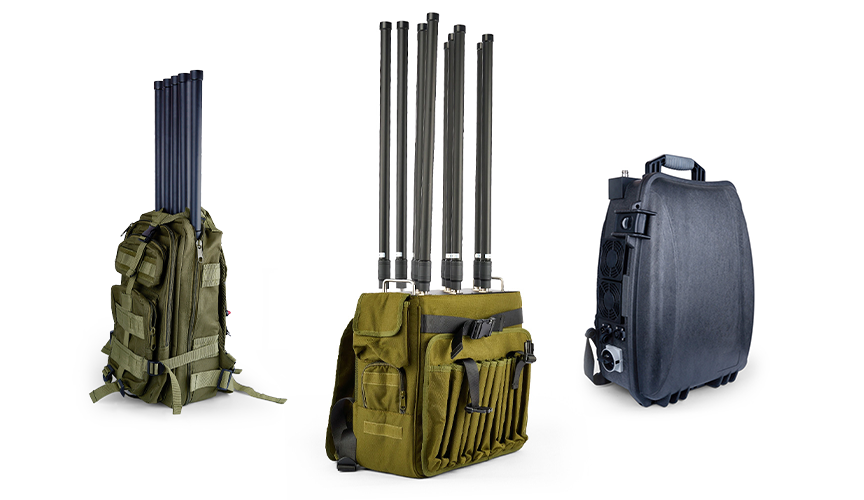
What is a Backpack Drone Jammer?
A backpack drone jammer is a man-portable counter-UAS system designed to be carried and operated by a single soldier or security operator. JianHong's BP-200 series represents the latest advancement in this technology, offering military-grade performance in a portable package. Unlike fixed installations or vehicle-mounted systems, the BP-200 provides mobile protection that moves with the team, making it ideal for patrols, convoy escorts, and dismounted operations.
The BP-200 series weighs between 8-15kg depending on configuration and can operate for up to 6 hours on battery power, providing continuous drone defense without external power sources. The ergonomic tactical backpack design distributes weight evenly across the shoulders and hips, allowing operators to maintain full mobility during extended missions.
JianHong's backpack jammers integrate multiple subsystems including RF power amplifiers (up to 200W), directional/omnidirectional antennas, intelligent battery management systems, and user-friendly interfaces. The BP-200 also includes GPS/GLONASS denial capabilities and can be integrated with detection systems for automated threat response.
Key Features of Portable Drone Jammers
- Multi-Band Coverage: Effective against 2.4GHz, 5.8GHz control links, 433MHz, 900MHz ISM bands, and GPS/GLONASS/BeiDou navigation systems
- High Output Power: 100W-200W total output for 2-3km effective jamming range in open terrain, 500m-1km in urban environments
- Extended Battery Life: 4-8 hours continuous operation with hot-swappable lithium batteries (28V/10Ah typical)
- Lightweight Design: Ergonomic backpack configuration under 15kg with MIL-STD-810G environmental rating
- Rapid Deployment: Power-on to full operation in under 30 seconds with single-button activation
- Omnidirectional Protection: 360° horizontal coverage with 60° vertical beam for comprehensive airspace protection
- Smart Power Management: Automatic frequency scanning and adaptive power control to optimize battery life and effectiveness
- Modular Architecture: Field-swappable antenna modules and frequency band cards for mission-specific configuration
Tactical Deployment Scenarios
1. Infantry Patrol Protection
One or two operators per squad carry backpack jammers, creating a mobile protective bubble around the patrol. The system automatically defeats reconnaissance drones and FPV attack drones attempting to approach the formation. Effective radius: 1-2km depending on terrain and threat type. Operators can march 15-20km daily while carrying the system.
2. VIP/Executive Protection
Close protection teams deploy backpack jammers during outdoor events, motorcades, and high-risk movements. The portable nature allows seamless transition between vehicles and foot movement. Multiple units can provide overlapping coverage for high-value principals. Integration with advance team reconnaissance ensures proactive threat mitigation.
3. Forward Operating Base Setup
During initial base establishment, backpack jammers provide immediate drone protection before fixed systems are installed. Multiple units positioned at perimeter points create overlapping coverage zones. As permanent infrastructure is deployed, backpack systems transition to mobile QRF (Quick Reaction Force) support.
4. Border Patrol Operations
Patrol teams operating in remote areas use backpack systems to counter smuggling drones and surveillance UAVs without requiring vehicle support. Extended battery options (12+ hours) support multi-day operations. Lightweight variants under 10kg enable rapid pursuit and interception missions.
5. Critical Infrastructure Security
Mobile security teams at airports, power plants, and government facilities use backpack jammers to respond to drone incursions while fixed systems provide baseline protection. The ability to reposition rapidly makes them ideal for dynamic threat response.
6. Special Operations Support
SOF teams integrate backpack jammers into insertion and extraction operations, providing drone protection during the most vulnerable phases of missions. Low electromagnetic signature modes reduce detection risk in sensitive environments.
JianHong BP-200 Series Specifications
| Parameter | BP-100 Standard | BP-200 High-Power | BP-50 Ultra-Light |
|---|---|---|---|
| Total Output Power | 100W | 200W | 50W |
| Effective Range | 1.5-2km | 3km | 0.8-1.2km |
| Frequency Bands | 4 bands | 6 bands | 3 bands |
| Battery Life | 4-5 hours | 6 hours | 8-10 hours |
| Total Weight | 8-10kg | 12-15kg | 5-7kg |
| Operating Temp | -20°C to +55°C | -30°C to +60°C | -10°C to +50°C |
| IP Rating | IP65 | IP67 | IP54 |
| Antenna Config | Omni | Omni + Directional | Omni compact |
Advantages Over Other C-UAS Systems
vs. Handheld Jammers
Higher power output (100-200W vs 10-30W), longer effective range (2-3km vs 500m), hands-free operation allowing weapon handling, extended battery life (6-8 hours vs 1-2 hours), and omnidirectional coverage eliminating need to track targets
vs. Vehicle-Mounted Systems
Terrain-independent operation in forests, mountains, and urban areas where vehicles cannot access. No vehicle dependency means continued protection during dismounted operations. Lower signature than vehicle systems.
vs. Fixed Installations
Rapid relocation in under 60 seconds, no infrastructure or power grid required, immediate deployment to emerging threat areas, and significantly lower acquisition cost ($15-50K vs $200K+)
vs. Drone Guns
Continuous 360° protection without requiring visual contact or aiming, automated operation allowing focus on primary mission, and effectiveness against drone swarms rather than single targets
Choosing the Right Backpack Jammer
When selecting a portable backpack drone jammer, consider these critical factors to match the system to your operational requirements:
- Mission Duration: Longer patrols (8+ hours) require higher battery capacity or spare batteries. Consider systems with hot-swap capability for continuous operation.
- Threat Profile: FPV-heavy environments need strong 5.8GHz coverage. Commercial drone threats require 2.4GHz focus. GPS denial adds another layer against autonomous drones.
- Terrain: Rough terrain and mountain operations favor lighter systems under 10kg. Urban environments may need directional options for precise coverage.
- Team Size: Larger teams can distribute load across multiple carriers or use buddy-team configurations. Solo operators need self-contained systems.
- Climate: Extreme temperatures require ruggedized components (MIL-STD-810G). Desert operations need enhanced cooling; arctic conditions need cold-weather batteries.
- Budget: Entry-level systems start at $15,000, mid-range at $25-40,000, and high-end military-grade systems at $50,000+. Consider lifecycle costs including batteries and maintenance.
Get Your JianHong BP-200 Today
JianHong offers the complete BP-200 series of portable backpack drone jammers, from lightweight patrol units to high-power tactical systems. Our man-portable C-UAS solutions are deployed by military and security forces in 50+ countries. Contact our technical team for a customized solution assessment.
- ✓Free technical consultation
- ✓Custom frequency configuration
- ✓Training and support included
- ✓OEM/ODM available
How Backpack Drone Jammers Work: Technical Deep-Dive
Understanding the technology behind portable drone jammers helps operators maximize effectiveness and make informed purchasing decisions.
RF Jamming Principles
Drone jammers work by transmitting high-power RF signals on the same frequencies used by drones for control and navigation. When the jamming signal overpowers the legitimate control signal (achieving a favorable jam-to-signal ratio), the drone loses connection to its operator. Most drones respond by either landing immediately, returning to their launch point (RTH), or hovering in place - all of which neutralize the threat.
Frequency Coverage
Modern drones operate across multiple frequency bands: 2.4GHz (primary control), 5.8GHz (video/control), 433MHz (long-range control), 900MHz (telemetry), and GPS bands (1.2GHz/1.5GHz for navigation). Comprehensive protection requires jamming capability across all these bands, which is why quality backpack systems include 4-6 independent jamming modules.
Power & Range Relationship
Jamming range follows the inverse-square law - doubling range requires quadrupling power. A 100W system provides approximately 1.5-2km range, while 200W extends to 2-3km. However, environmental factors (terrain, buildings, vegetation) significantly impact real-world performance. Urban environments typically reduce effective range by 50-70%.
Antenna Design
Backpack jammers use either omnidirectional antennas (360° coverage, lower gain) or directional antennas (focused coverage, higher gain/range). Most systems combine both: omni antennas for continuous protection and directional options for extended-range engagement of specific threats.
Real-World Deployment Case Studies
Case Study 1: Military Convoy Protection
Scenario: A military convoy of 12 vehicles traveling through contested territory faced daily drone reconnaissance and occasional FPV attack attempts.
Solution: Backpack jammers were distributed to 4 vehicles (lead, trail, and 2 center positions), with operators positioned in turret positions for maximum antenna height.
Result: Over 6-month deployment: 47 drone approaches detected, all neutralized before reaching engagement range. Zero casualties from drone attacks. Average response time: 3 seconds from detection to jamming activation.
Case Study 2: Executive Protection Detail
Scenario: Security team protecting a high-profile CEO during outdoor shareholder meeting at corporate campus faced credible drone surveillance threat.
Solution: 3-person close protection team with 2 backpack jammers provided overlapping coverage of principal's location and movement routes.
Result: 2 unauthorized drones approached venue perimeter during 4-hour event. Both forced to land within 200m of activation. No disruption to scheduled activities. Client unaware of threats until post-event briefing.
Case Study 3: Border Patrol Operations
Scenario: Remote border sector experiencing increased drone-assisted smuggling operations, with drones conducting surveillance and payload drops.
Solution: Patrol teams equipped with ultra-light (7kg) backpack jammers for extended foot patrols in mountainous terrain.
Result: 68% reduction in successful drone operations in sector over 3-month period. 12 drone interdictions resulting in seizures. Patrol effectiveness maintained with no mobility impact from equipment weight.
Frequently Asked Questions (FAQ)
Q: Is it legal to use drone jammers?
A: Regulations vary by country. In many jurisdictions, drone jammers are restricted to authorized government, military, and law enforcement use. Private use is generally prohibited due to potential interference with legitimate communications. Always verify local regulations before deployment.
Q: Will the jammer affect my own communications?
A: Quality backpack jammers include frequency filtering to protect common communication bands. However, devices operating on 2.4GHz (some WiFi, Bluetooth) may experience interference within close proximity (under 50m). Military-grade systems include IFF (Identification Friend-or-Foe) features.
Q: How effective are jammers against autonomous drones?
A: Drones with pre-programmed waypoint navigation can continue missions even without operator control. This is why GPS jamming capability is essential - disrupting navigation forces most autonomous drones to fail-safe behaviors (landing or hovering).
Q: Can drones defeat jamming?
A: Advanced drones may use frequency hopping, directional antennas, or autonomous navigation to resist jamming. However, backpack jammers counter these by: (1) wideband jamming covering entire frequency ranges, (2) sufficient power to overwhelm directional links, (3) GPS denial eliminating autonomous fallback.
Q: What maintenance do backpack jammers require?
A: Routine maintenance includes: battery conditioning/replacement (every 500-1000 cycles), antenna connector inspection, firmware updates, and annual factory calibration. Field maintenance is minimal - primarily keeping connectors clean and dry.
Q: How long do batteries last?
A: Lithium batteries typically provide 500-1000 charge cycles before significant capacity degradation. At daily use, expect 2-3 year battery lifespan. Replacement batteries cost $500-2000 depending on capacity and military certification.
Q: Can backpack jammers stop drone swarms?
A: Yes, omnidirectional jammers are actually more effective against swarms than single-target systems like drone guns. The jamming field affects all drones within range simultaneously, regardless of number. Effective swarm defense requires sufficient power to maintain jam-to-signal ratio against multiple threats.
Q: What's the difference between jamming and spoofing?
A: Jamming overwhelms drone communications with noise, causing loss of control. Spoofing transmits false signals (especially GPS) to deceive the drone into flying to wrong locations or landing. Some advanced backpack systems include both capabilities for layered defense.
Related Articles
Last updated: January 12, 2026